AI search statistics for 2026
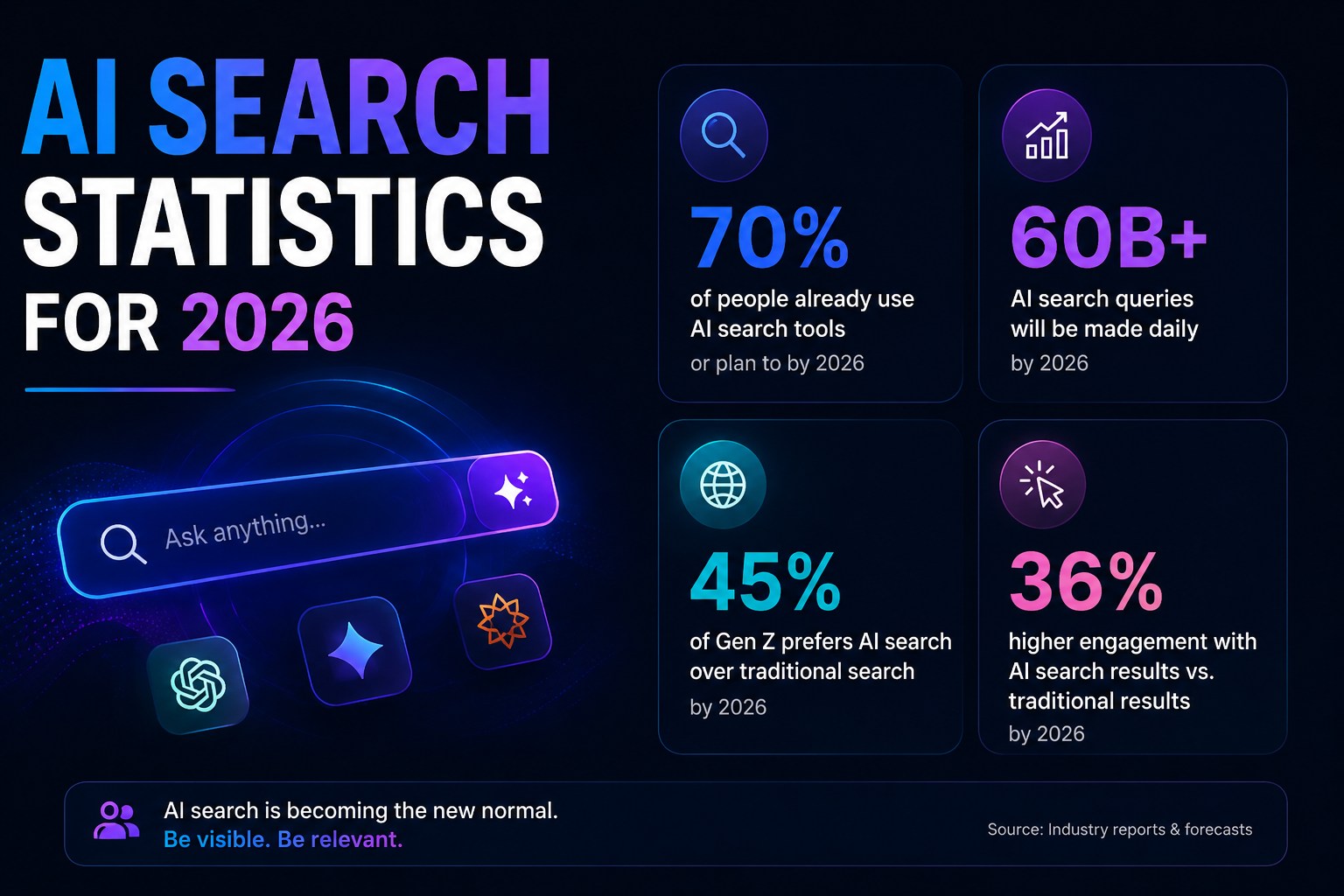
Everyone wants a headline number for AI search in 2026, ideally one big scary percentage they can paste into a strategy deck. I am not going to hand you a fake one. What I can do is walk you through the real shifts, what they mean for your traffic, and how to pull figures you can actually stand behind.
The honest summary of AI search statistics for 2026 is this: a rising share of searches now end with an AI-generated answer instead of a click, AI answer tools like ChatGPT and Perplexity are pulling real referral traffic, and no single public number captures all of it. Any figure you quote should carry a named, checkable source.
Why exact AI search statistics are hard to trust
Most viral AI search numbers fall apart when you check them. Vendors publish surveys with tiny or unnamed samples, blog posts recycle a stat until its origin is lost, and different studies measure different things, so a number about AI Overviews does not describe ChatGPT usage. Before you repeat any figure, find the primary source, the sample size and the date. If you cannot, drop the number. A directional claim you can defend beats a precise one you cannot.
The trend that actually matters: fewer clicks per search
The clearest shift is that answers now appear on the results page itself. When Google shows an AI Overview or a user asks ChatGPT directly, the question often gets resolved without a visit to your site. This is the zero-click pattern that has been building for years, and AI answers accelerate it. For you that means impressions can hold steady or rise while clicks soften. To read that correctly you have to watch both numbers together, which our Google Search Console guide walks through step by step.
Where AI referral traffic shows up
The counterweight to fewer clicks is a new traffic source: AI tools that cite you. Perplexity, ChatGPT with browsing, and Google's AI answers can send visitors when they name your page as a source. In analytics this arrives as referrals from domains like perplexity.ai or chatgpt.com. The volume is smaller than classic organic search for most sites today, but it tends to be high-intent, because the person already read a summary and clicked through for depth. Getting into those citations is the whole point of GEO, getting cited by ChatGPT, Gemini and Perplexity.
How to measure your own AI search numbers
The most useful statistics are the ones from your own property, and you can gather them without guessing. Check Search Console for the gap between impressions and clicks on your top queries. Segment analytics referrals to see whether AI domains are sending anyone yet. Run a handful of your buyer questions through ChatGPT and Perplexity and note whether you appear. That last habit, checking your visibility by hand, is the honest version of an AI search report, and it beats any borrowed chart. Our guide to measuring SEO ROI shows how to tie those observations to revenue.
What the direction means for planning
You do not need a precise percentage to plan well, because the direction is clear enough to act on. Assume more of your audience will meet a summary of your topic before they meet your site, and that the summary may or may not name you. That pushes work toward being the source a model quotes rather than the tenth blue link. If the difference between ranking and being cited is fuzzy for you, SEO vs AEO vs GEO clears it up.
Numbers worth tracking, sources worth naming
If you want figures for a deck, pull them from named public sources you can link: Google's own posts about AI in search, published research from firms that disclose their methods, and platform-reported usage where it exists. Note the date next to every number, because this area moves fast and a 2024 figure can mislead in 2026. When a stat has no traceable home, label it as an estimate or leave it out.
The practical takeaway
Stop chasing one dramatic percentage and start measuring your own share of AI answers. Run our free SEO and GEO tools against your key pages, or start with a free site audit to see where you stand today. Then recheck your buyer questions in the AI tools each month. Your own trendline, tracked honestly, is the only AI search statistic that will actually guide your next decision. And when a colleague forwards you a jaw-dropping stat from a webinar, ask one question before it goes in the deck: who published it, when, and how many people did they measure. If those answers are missing, the number is decoration, not evidence, and you are better off citing your own data than borrowing someone else's guess. The teams that navigate this shift well are not the ones with the best slides. They are the ones who checked their own Search Console and their own AI answers this month and adjusted from there.
Frequently asked questions
What is the most reliable AI search statistic for 2026?
The most reliable numbers come from your own Search Console and analytics, not from viral charts. Public figures from named sources like Google's own posts or method-disclosing research firms are usable if you cite the source and date. Treat any stat without a traceable origin as an estimate, and verify sample size before you repeat it anywhere.
Is AI search replacing traditional Google search?
Not replacing, but reshaping. AI answers now sit on top of or inside the results page, so more questions get resolved without a click. Classic search still drives most traffic for most sites in 2026. The safer framing is that AI answers change how often people click, not that one tool has wiped out another overnight.
How do I see if AI tools are sending me traffic?
Open your analytics and segment referral sources for domains such as perplexity.ai and chatgpt.com. If those appear, AI tools are citing you and sending visitors. Volumes are usually smaller than classic organic search today but tend to be high-intent, since the person already read a summary before clicking through to your page for more detail.
Why should I avoid quoting big AI search percentages?
Because most of them lack a checkable source. Surveys with tiny or unnamed samples get recycled until their origin disappears, and studies measuring different things get blended into one misleading number. If you quote a figure you cannot trace, you risk your credibility. A directional claim you can defend is worth more than a precise one you cannot.
What number should I track instead?
Track your own presence in AI answers. Each month, run your main buyer questions through ChatGPT, Perplexity and Google's AI answers, and record whether your brand appears. Pair that with the impressions-versus-clicks gap in Search Console. That homemade trendline is more actionable than any borrowed statistic, because it reflects your actual pages and your actual audience.
Want this done for your site?
Run a free audit and see exactly what to fix for Google and AI search.