How to measure SEO ROI
Your traffic is up and you tell the team SEO is working. Then someone asks the fair question: working compared to what we spent? If your only answer is a rising line on a chart, you are about to lose the budget argument. Traffic is not money.
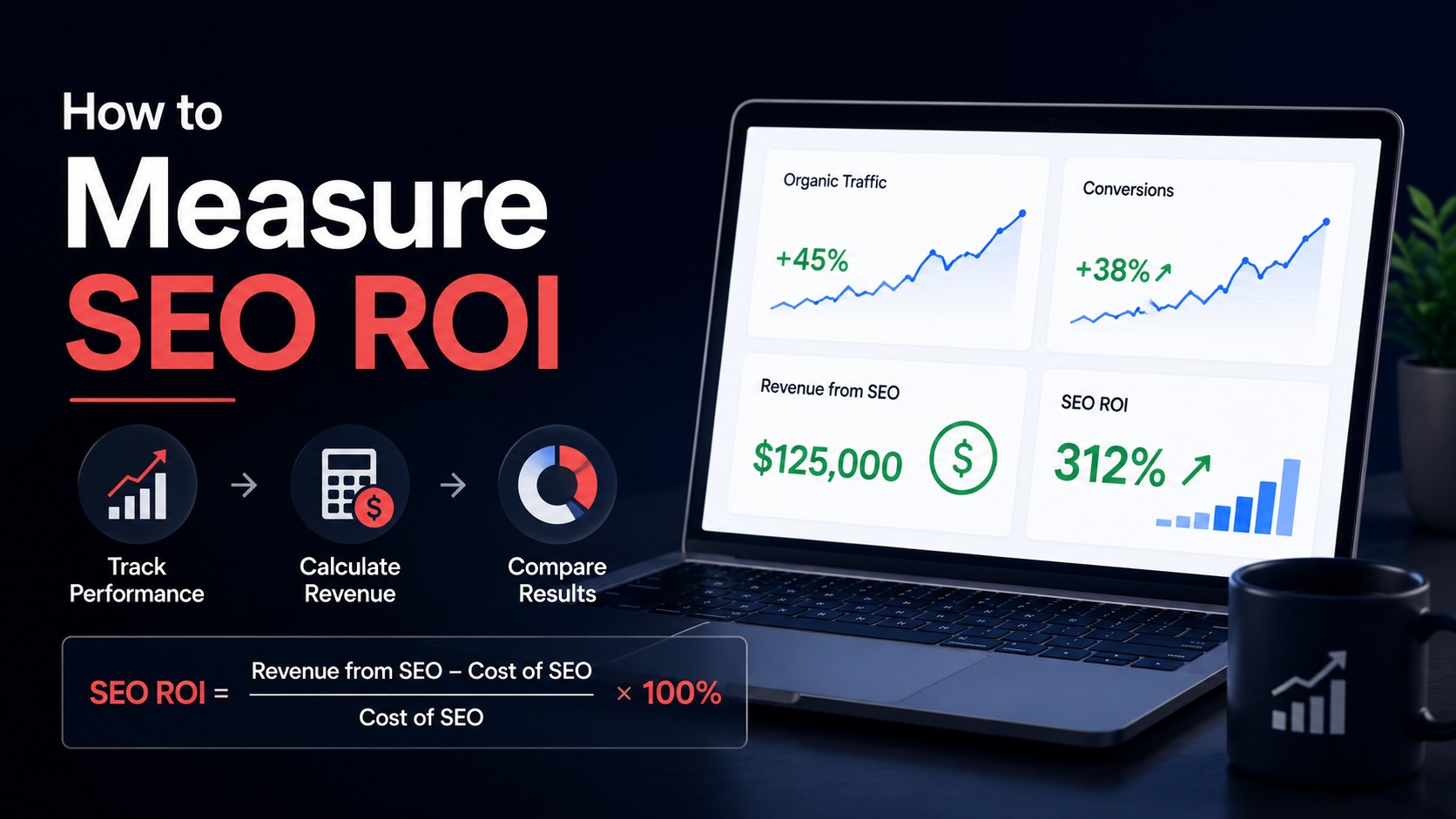
To measure SEO ROI, track the revenue your organic traffic generates, subtract what you spent to earn it, and divide by that cost. The formula is revenue from SEO minus SEO cost, divided by SEO cost. The real work is attributing revenue to organic search, which you do with analytics, Search Console, and conversion tracking.
The formula, in plain terms
SEO ROI is return over cost. Add up everything you invested: agency retainers or salaries, tools, content production, and any link costs. Add up the revenue you can trace to organic search over the same period. Subtract the cost from the revenue, divide by the cost, and multiply by 100 for a percentage. If you spent 10,000 and organic search drove 40,000 in revenue, your ROI is 300 percent. The formula is simple; the inputs are where judgment comes in.
Decide what a conversion is worth
You cannot measure return without defining the goal. For an ecommerce store, it is a sale with a clear order value. For a service business or SaaS company, it is usually a lead, a trial, or a demo, and you assign each one a value based on how often it turns into a customer and what that customer is worth. If ten leads become one customer worth 5,000, each lead is worth 500. Set these numbers before you start, or you will rationalise them later.
Isolate the organic channel
Next, separate organic search from your other traffic. Your analytics platform reports traffic by channel, so you can filter to organic and see the conversions it drove. Connect Google Search Console for the query and landing-page detail analytics hides. The goal is a clean view of what search visitors did, kept apart from paid ads, email, and social, so you are crediting SEO only for what SEO actually delivered.
Attribution is messy, and that is normal
Here is the honest part. A buyer might find you through a blog post, leave, return a week later through a branded search, and convert on their phone. Which channel gets the credit? Last-click attribution gives it all to the final touch and undercounts SEO's role in discovery. First-click over-credits it. I lean on a blended view and accept that the number is a solid estimate, not a courtroom fact. Anyone selling you perfect SEO attribution is selling something.
Watch leading indicators while you wait
SEO revenue lags, because ranking takes months, so you need earlier signals to know you are on track. Growth in impressions and rankings for commercial keywords, more indexed pages, and rising organic sessions to money pages all precede revenue. If you are wondering why the payoff feels slow, our guide on how long SEO takes to work sets fair expectations. Track these leading numbers monthly and the revenue numbers quarterly.
Put it next to what SEO costs
ROI only means something against real spend, so know your true costs. That includes tools, content, and time, not just an agency invoice. Our breakdown of how much SEO costs helps you build an honest cost figure. Compared against paid channels, SEO usually looks expensive early and cheap later, because the traffic keeps arriving after you stop paying for each click, unlike ads.
Count the value beyond the last click
Direct conversions undersell what SEO does. A blog post that never closes a sale might introduce your brand, earn an email signup, or get shared in a way that pays off months later. You do not have to invent numbers for all of it, but ignore it entirely and you will underrate your content and cut the wrong pages. Track assisted conversions in your analytics, where organic search touched a journey that converted through another channel, and note branded search growth over time, since more people searching your name is often a downstream effect of content they read earlier. Treat these as supporting evidence next to your hard revenue figure, not a replacement for it.
Reporting ROI so people believe it
A number nobody trusts is worthless, so show your work. Present the revenue, the cost, the formula, and the attribution model you used, and name its limits out loud. Pair the ROI figure with leading indicators so a slow revenue month does not read as failure. Tie it back to findings from your last SEO audit and the keywords you targeted from keyword research. If you want the tracking set up properly, a free audit maps your organic conversions, and our pricing page shows the cost side of the equation so your ROI math starts from real inputs.
Frequently asked questions
What is a good SEO ROI?
It varies by industry and margin, but organic search often returns several times its cost once rankings mature, because the traffic keeps arriving after you stop paying per click. Compare your figure against paid channels over the same period, and judge the trend across quarters rather than a single month before drawing conclusions.
How do I attribute revenue to SEO?
Filter your analytics to the organic search channel, connect Google Search Console for query detail, and track conversions from those visitors. Attribution is imperfect because buyers touch several channels before converting, so pick a model, last-click or blended, state its limits, and treat the result as a strong estimate rather than an exact figure.
How long before SEO shows a return?
Usually several months, because ranking takes time and revenue lags behind rankings. Watch leading indicators like rising impressions, improving positions, and more indexed pages in the early months, then measure revenue quarterly. If you expected returns in weeks, the timeline of SEO is the first expectation you need to reset.
Should I measure leads or sales for SEO ROI?
Measure whatever sits closest to revenue for your business. Ecommerce sites track sales directly. Service and SaaS businesses track leads or trials, then assign each a value based on how often it converts and what a customer is worth. The point is to connect organic traffic to money, not just count form fills.
Is SEO cheaper than paid ads?
It depends on your time horizon. SEO usually costs more up front and returns little for months, while ads deliver traffic immediately for as long as you pay. Over time SEO tends to win on cost per visit, because ranked pages keep drawing traffic without a per-click charge. Most businesses end up needing both.
Want this done for your site?
Run a free audit and see exactly what to fix for Google and AI search.