Link building in 2026: what still works
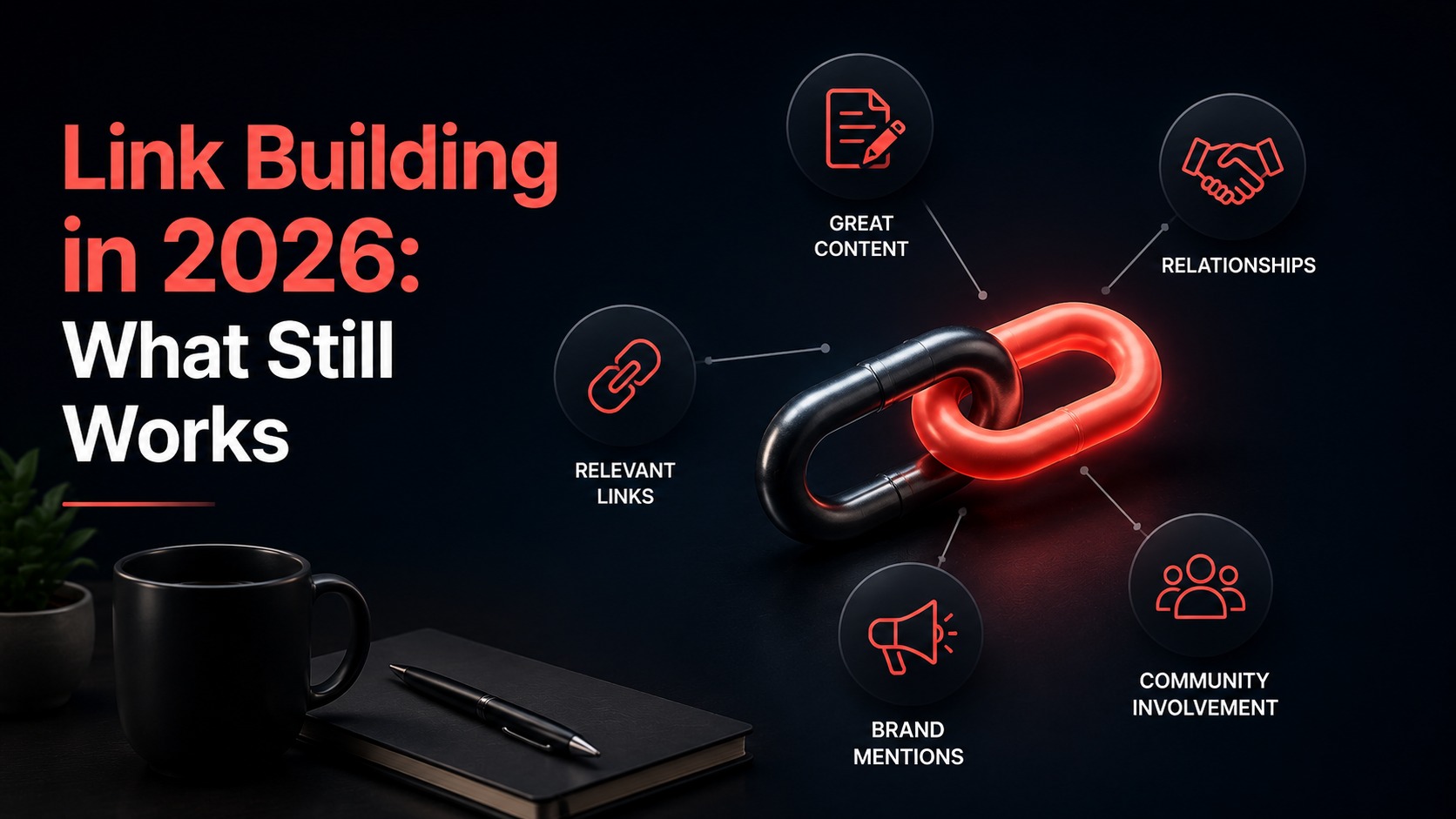
Link building has a bad reputation, and some of it is earned. For years people bought links, spun junk articles, and traded favors inside private networks. Most of that does nothing now, and a fair bit of it will get your site penalized. So the honest question is what still works.
Link building in 2026 works when you earn links people would give you anyway: original data, useful free tools, sharp expert commentary, and pages worth citing. Google rewards editorial links from relevant, trusted sites and discounts paid or manipulated ones. Aim for relevance and trust over raw link count.
Why links still matter for rankings
Links still matter because they remain one of the clearest signals that other people find your work worth referencing. When a respected site in your field points to your page, that is a vote you did not cast for yourself. Google has spent two decades getting better at telling real votes from fake ones, so the value has moved toward links a human editor actually chose to place. If you want the wider picture on how these signals fit together, our off-page SEO guide covers the full set. The short version is that a page nobody references tends to sit still, no matter how good the writing is.
What Google actually rewards
Google rewards relevance, editorial choice, and trust. A single link from a well-known site in your niche often outweighs fifty links from random directories. Anchor text that reads naturally helps too, since forced exact-match anchors look engineered and reviewers can spot them from a mile away. Do not confuse any of this with chasing a vanity number. Domain authority is a third-party score, not something Google reports, so treat it as a rough guide and never as the goal itself.
Tactics that hold up
The tactics that hold up share one trait: they give the linking site a reason to link. Publishing original research or survey data hands writers a number to cite. Building a free calculator or checker hands them a resource to recommend. Digital PR gets your data in front of journalists who need sources on deadline. Broken link building finds dead links on pages you belong on and offers your page as the replacement. And guest posting on relevant sites still works when the writing is real and the audience is real. For a longer, hands-on list, see our roundup of ten backlink tactics that actually earn links.
Shortcuts that get sites penalized
Shortcuts that get sites penalized all try to fake the signal instead of earning it. Buying links, renting space on a private blog network, mass-posting comments, and swapping links at scale are the usual suspects. These can work for a stretch, then a single algorithm update erases the gains and sometimes drags the rest of your rankings down too. I have watched sites lose years of progress this way. The cleanup, filing disavows and rebuilding trust, takes far longer than the honest route would have in the first place.
How to start without a big budget
Start by finding the pages on your site that already deserve links but do not have them. A strong guide, a data study, or a genuinely handy tool is much easier to promote than a thin product page. Then build a short list of sites that link to similar resources and reach out with a specific reason they should care. Consistency beats intensity here. Ten thoughtful outreach emails a week will outrun a one-time blast every time. You can point our free SEO audit at your site to see which pages have link potential, and the free SEO tools help you spot gaps without paying for an expensive suite.
Measuring whether it is working
Measure link building by the quality and relevance of what you earn, not the total. Track links from sites in your field, watch whether your target pages climb for their keywords, and note any referral traffic that arrives through the link itself. A link that sends real visitors and sits on a relevant page is worth more than ten you will never notice. Give it time, too. New links can take weeks to affect rankings, and the compounding effect only shows up over months.
Relevance beats volume every time
If I had to pick one principle, it would be relevance over volume. A link from a site that shares your topic and audience carries context that a random high-traffic site cannot. Search engines read that context, and so do the people who click. This is also why buying links in bulk fails: the sites rarely relate to you, so the signal reads as noise. Spend your energy where a real editor in your field would plausibly reference you, and skip everything else. A smaller profile of relevant links ages better than a bloated one full of mismatched sites, and it is far easier to defend if anyone ever looks closely.
If you remember one thing, make it this: earn links you could show a client without flinching. That single filter rules out almost everything that gets sites into trouble, and it keeps you pointed at work that keeps paying off long after you send the email.
Frequently asked questions
Does link building still work in 2026?
Yes, but only the honest version. Editorial links from relevant, trusted sites still move rankings because they show real people reference your work. Paid links, private networks, and mass link swaps have lost their value and now carry real penalty risk, so the returns have shifted toward links you genuinely earn.
How many backlinks do I need to rank?
There is no fixed number. Relevance and quality matter far more than count. A handful of links from respected sites in your field can outrank a page with hundreds of low-quality links. Focus on earning links that sit on relevant pages and send real visitors rather than hitting a target total.
Is buying backlinks safe?
No. Buying links breaks Google's guidelines and can trigger a manual action or an algorithmic drop that wipes out rankings. Even when it seems to work briefly, the risk is not worth it. The cleanup after a penalty usually costs more time and money than earning links honestly would have.
How long does link building take to show results?
Expect weeks before a single new link affects rankings, and months before a steady effort compounds into meaningful movement. Google has to crawl the linking page, weigh its trust, and reassess your page. Treat link building as a slow build rather than a switch you flip for instant traffic.
What is the easiest white-hat link to earn first?
Usually a broken link replacement or a mention you turn into a link. Both give the other site a clear reason to act: you are fixing a dead link or crediting a source they already referenced. These take less pitching than guest posts and rarely need a budget to land.
Want this done for your site?
Run a free audit and see exactly what to fix for Google and AI search.