Guest posting that actually helps SEO
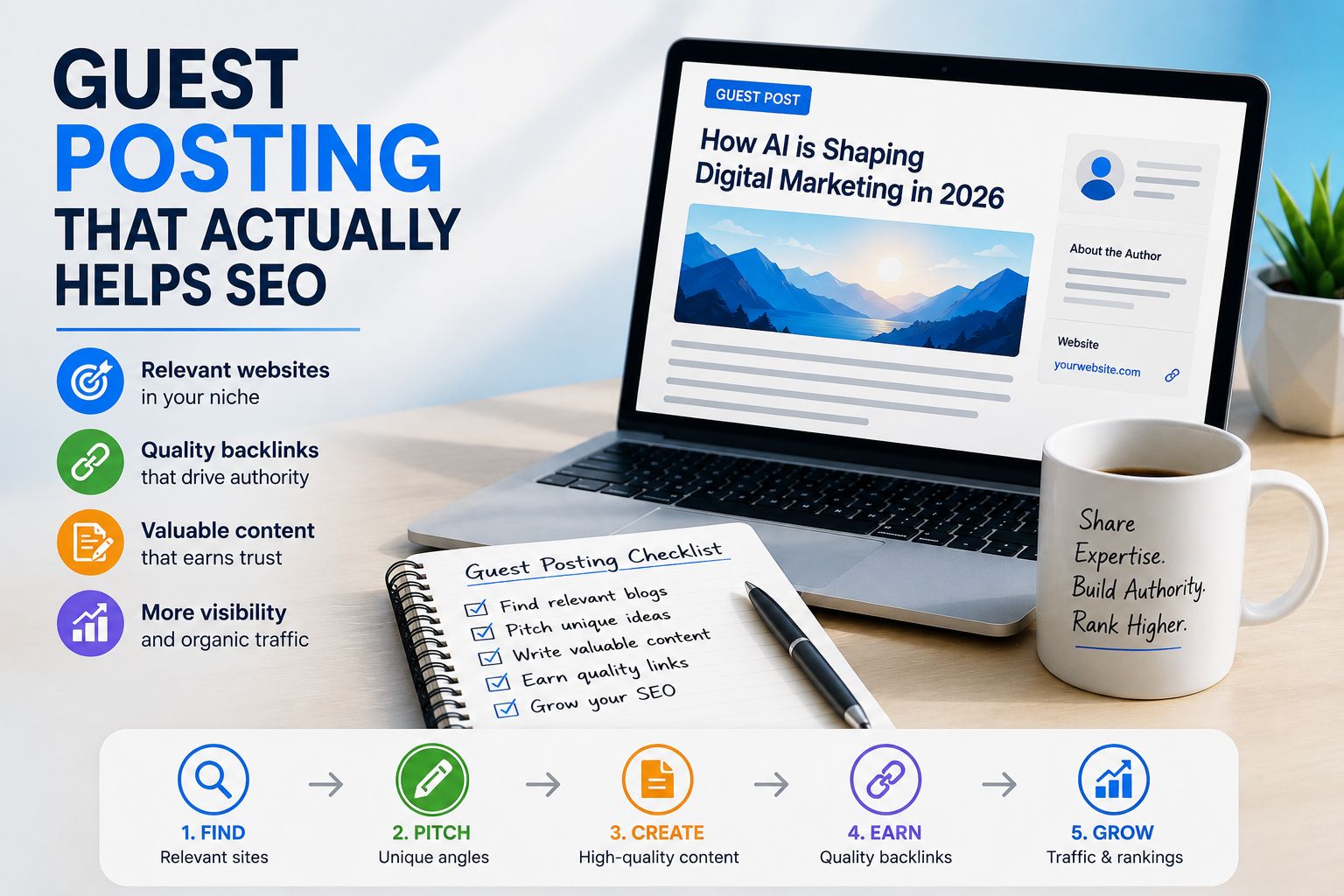
Guest posting got a bad name because people abused it. They pumped out thin articles on any site that would take them, stuffed in exact-match links, and called it a strategy. Google noticed, and now the tactic sits under a cloud of suspicion. But guest posting still helps SEO when you do it the way it was meant to be done, and that difference is worth understanding.
Guest posting helps SEO when you write genuinely useful articles for relevant sites with real audiences. You earn a contextual link, reach new readers, and build your name as someone worth citing. It backfires when you chase low-quality sites, spin generic content, or over-optimize anchors, since that pattern looks like manipulation.
When guest posting works and when it does not
Guest posting works when the site is relevant, the audience is real, and the article earns its place. It fails when the site exists mainly to sell links, publishes anything, or has no genuine readership. The link is only part of the value. A good placement also sends interested visitors and builds credibility, which a link farm never will. Our link building guide explains why relevance decides so much here.
Finding the right sites to pitch
Find sites your actual customers read, not just any site that accepts guest posts. Look for publications in your field with real traffic, engaged comments or shares, and editorial standards you respect. A useful test is whether you would be proud to have your name on the page. If the site publishes obvious link-bait from anyone, walk away. Quality here protects you from the pattern Google penalizes.
Pitching without sounding like everyone else
Pitch a specific topic you can cover better than most, and show you understand the site. Editors receive piles of generic pitches, so a tailored one stands out fast. Reference their audience, suggest two or three concrete angles, and keep it short. The same brevity that works in digital PR pitches works here. You are asking for their readers' attention, so respect their time first.
Writing a post worth publishing
Write the article for the host site's readers, not for your link. That single mindset shift fixes most guest posts. Bring a real point of view, useful detail, and examples the audience can act on. When the writing genuinely helps, the editor is happy, the readers benefit, and your link sits in content that reflects well on you. Thin filler around a link does the opposite and can taint your profile.
Placing links the right way
Place a link only where it adds something for the reader, and let the anchor text read naturally. One relevant, contextual link is worth more than three forced ones, and it looks far less like manipulation. A link in your author bio is fine, and an in-content link works when it genuinely supports a point. Over-optimized anchors are one of the clearest red flags, so keep them natural. The tactics in our backlink guide follow the same rule.
What to avoid entirely
Avoid paid guest post networks, sites that publish anything for a fee, and mass campaigns of near-identical articles. These leave a footprint that gets whole batches of links devalued or penalized. If a service offers hundreds of guest posts for a flat rate, that is the pattern to run from. The honest version is slower, and it is also the only version that keeps paying off. When you need to fill link gaps, broken link building is a safer companion tactic.
Measuring whether it helped
Judge guest posting by referral traffic, relevance, and whether your name gains traction, not by raw link count. A post on a respected site that sends engaged readers is a win even before you count the link. Track which placements bring visitors who stick around, and keep working with the sites that do. For a structured way to plan and check your link work, our AEO and GEO checklist keeps the essentials in one place, and a free SEO audit shows where a guest post link would help most.
Building a reputation, not just a link
The best reason to guest post has little to do with the link at all. Showing up with a genuinely helpful article in a place your customers trust puts your name in front of the exact people you want to reach. Some of them will click through, a few will remember you, and over time that recognition compounds. Editors notice too, and a writer who delivers well gets invited back. So treat each post as a chance to prove you know your subject, not as a slot to drop a link into. The link is a bonus on top of the audience and the credibility, and it is the part that lasts longest when the writing genuinely earns it.
Guest posting is not dead. The lazy version is, and good riddance. Write for real readers on sites you respect, place links that genuinely help, and the tactic still earns its place in a modern link strategy.
Frequently asked questions
Does guest posting still help SEO in 2026?
Yes, when done well. Writing genuinely useful articles for relevant sites with real audiences earns a contextual link, sends interested visitors, and builds your name. It only backfires when you chase low-quality sites, spin generic content, or over-optimize anchor text, since that pattern looks like manipulation and can devalue the links.
How do I find good sites for guest posting?
Look for publications your actual customers read, with real traffic, genuine engagement, and editorial standards you respect. A useful test is whether you would be proud to have your name on the page. Avoid any site that publishes obvious link-bait from anyone or exists mainly to sell placements, since those carry penalty risk.
How many links should a guest post include?
Usually one, placed where it genuinely helps the reader, with natural anchor text. One relevant contextual link is worth more than several forced ones and looks far less like manipulation. A link in your author bio is fine too. Over-optimized or stuffed anchors are a clear red flag, so keep placements restrained.
Are paid guest posts safe?
No. Paid guest post networks and sites that publish anything for a fee leave a footprint Google can detect, and whole batches of those links get devalued or penalized. If a service offers hundreds of placements for a flat rate, avoid it. Earn placements through real pitches on sites with genuine audiences instead.
How do I know if a guest post worked?
Judge it by referral traffic, relevance, and whether your name gains traction, not by link count alone. A post on a respected site that sends engaged readers is a win before you even count the link. Track which placements bring visitors who stick around, and keep partnering with the sites that deliver them.
Want this done for your site?
Run a free audit and see exactly what to fix for Google and AI search.