What is SEO? A plain-English guide
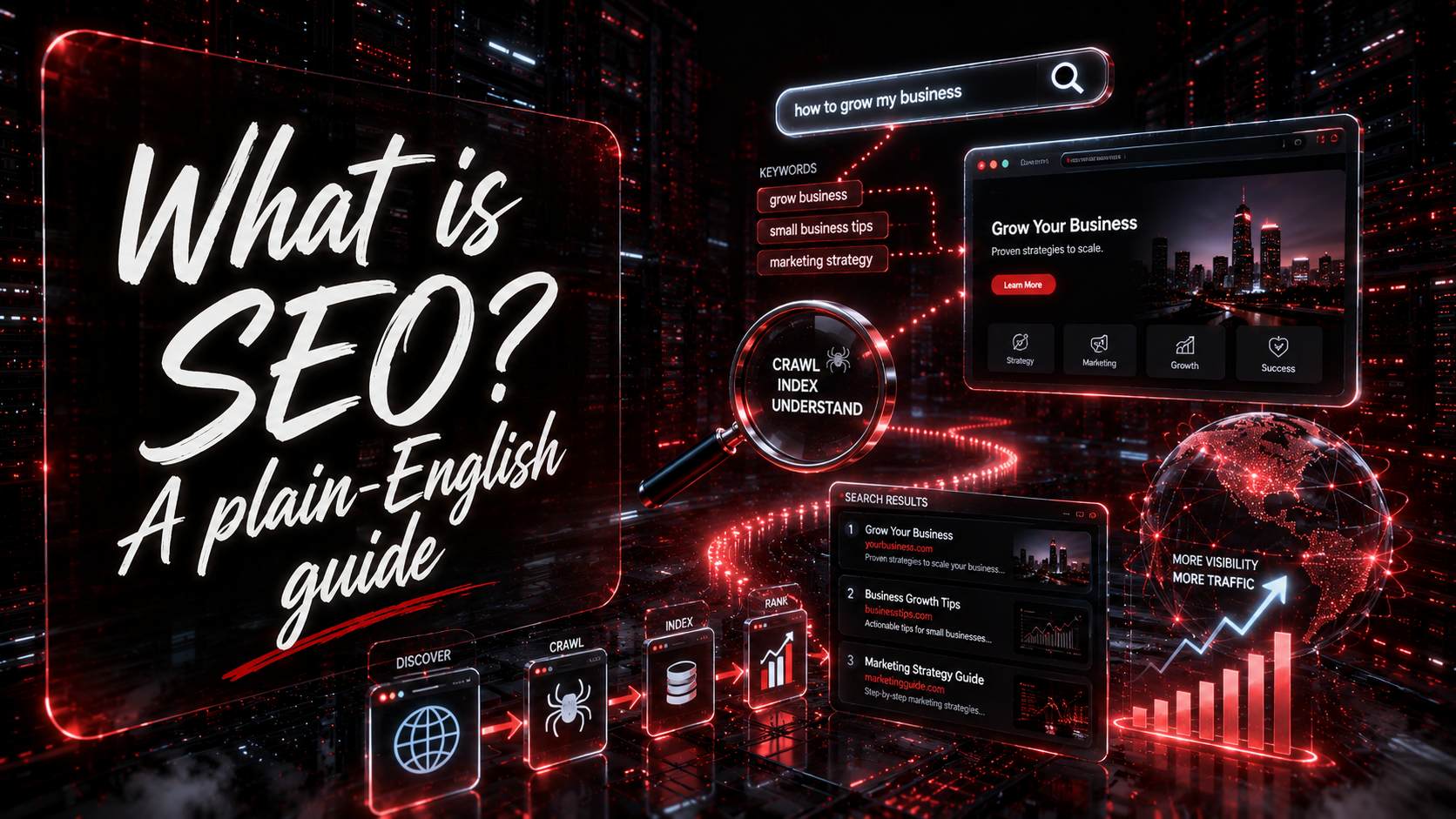
Most explanations of SEO either drown you in jargon or wave the whole thing away as magic. Here is the version I wish someone had handed me on day one.
SEO, short for search engine optimization, is the practice of getting your pages to show up when people search for what you offer. You do it by matching what searchers actually want, making your pages easy for Google to read, and earning enough trust that Google ranks you above the competition.
What does SEO actually do?
SEO turns search engines into a steady source of visitors who are already looking for you. Someone types a question into Google, and if you have done the work, your page is one of the answers they see. No ad spend per click. No cold outreach. The traffic keeps coming as long as your page stays useful and ranked.
Compare that to social media, where a post lives for a day and fades. A blog post that ranks can bring in visitors for years. That compounding effect is why people put up with how slow SEO can feel at the start.
It also tends to be the cheapest traffic a business can build once it gets going. You are not bidding against competitors for every click. You are earning a spot that keeps paying out.
Who is SEO for?
SEO is for any business whose customers use search to find what you sell. That covers most of them. A local plumber, a software company, an online store, and a solo consultant all have people typing relevant questions into Google right now. If nobody searches for your topic, SEO is the wrong channel. If they do, and they almost always do, it belongs in your plan.
What are the three parts of SEO?
SEO breaks into three jobs: on-page, off-page, and technical. Each one answers a different question Google is asking about your site.
On-page is about the content itself, the words, headings, and structure that tell Google what a page covers. Our complete guide to on-page SEO walks through the details. Off-page is about reputation, mostly the links and mentions other sites give you, which we cover in off-page SEO explained. Technical SEO makes sure Google can crawl and load your site without tripping over anything.
You need all three. A brilliant article nobody links to will struggle. A well-linked site full of thin content will too.
How does Google decide who ranks?
Google ranks pages by trying to guess which one best answers the search. It reads your content, checks how other sites vouch for you, and weighs dozens of other signals. If you want the mechanics, we broke it down in how Google search actually works.
The short version is relevance and trust. Relevance means your page matches the search intent. Trust means Google has reasons to believe you over the next site. You build relevance with good content and the right keywords. You build trust over time.
How is SEO different from paid ads?
SEO earns clicks for free while ads buy them. With Google Ads you pay every time someone clicks, and the moment you stop paying, the traffic stops. With SEO you invest up front in content and links, and the results build slowly but stick around. We compared both in SEO vs SEM if you are deciding where to put your budget.
Most businesses I work with end up doing both. Ads for quick wins and testing, SEO for the long game.
What comes before writing content?
Keyword research comes first, because it tells you what people actually search for. Guessing at topics is how you end up with a beautiful post that nobody finds. Start with our practical keyword research guide, then pick the handful of terms your ideal customer would type.
Does SEO still work in 2026?
Yes, though the goalposts moved. Search now includes AI answers, featured snippets, and results that summarize pages without a click. That changes tactics, not the core idea. Google still needs pages worth ranking, and AI answer engines still pull from content they trust. If anything, sites with clear, genuinely helpful content have an edge now, because filler is easier than ever to spot.
How do you know if SEO is working?
You track a few simple things: your rankings for target keywords, the number of visitors coming from search, and whether those visitors do what you want. Google Search Console shows most of this for free. Do not obsess over daily swings. Look at the trend over weeks and months, because that is the timescale SEO moves on.
If rankings and search traffic climb steadily, it is working. If nothing moves after a few months of real effort, revisit your keywords and content quality first.
How do you start?
Start by seeing where you stand. Pull up your site, search for a few terms you want to rank for, and note where you land. Then run a free audit to find the technical issues and content gaps holding you back. From there, fix the basics, pick your keywords, and publish something better than what currently ranks.
You can also browse our free SEO and GEO tools to check specific pages as you go. SEO rewards patience, but the first useful page you rank for tends to change how you think about the whole thing.
Frequently asked questions
What does SEO stand for?
SEO stands for search engine optimization. It is the practice of improving your website so it shows up higher in search results like Google. The goal is to attract visitors who are already searching for what you offer, without paying for each click the way you would with ads.
How long does SEO take to work?
Most sites see meaningful movement in three to six months, though competitive topics can take longer. SEO compounds slowly because Google needs time to crawl your changes, and trust builds gradually. Early wins often come from fixing technical issues and targeting less competitive keywords first.
Is SEO free?
The traffic is free, but the work is not. You do not pay Google for organic rankings, unlike ads where every click costs money. You do invest time, content, and sometimes tools or help. Think of it as earning visitors rather than renting them.
Can I do SEO myself?
Yes, especially the basics. Keyword research, writing helpful content, and fixing on-page issues are all learnable. Many small businesses handle SEO in-house for a long time. You might bring in help for technical audits or link building later, but you can start on your own today.
What is the difference between SEO and SEM?
SEO earns unpaid rankings over time, while SEM, or search engine marketing, usually means paid ads that appear instantly and stop when you stop paying. SEO is the long game with lasting results. SEM buys visibility now. Many businesses run both together.
Want this done for your site?
Run a free audit and see exactly what to fix for Google and AI search.