On-page SEO: the complete guide
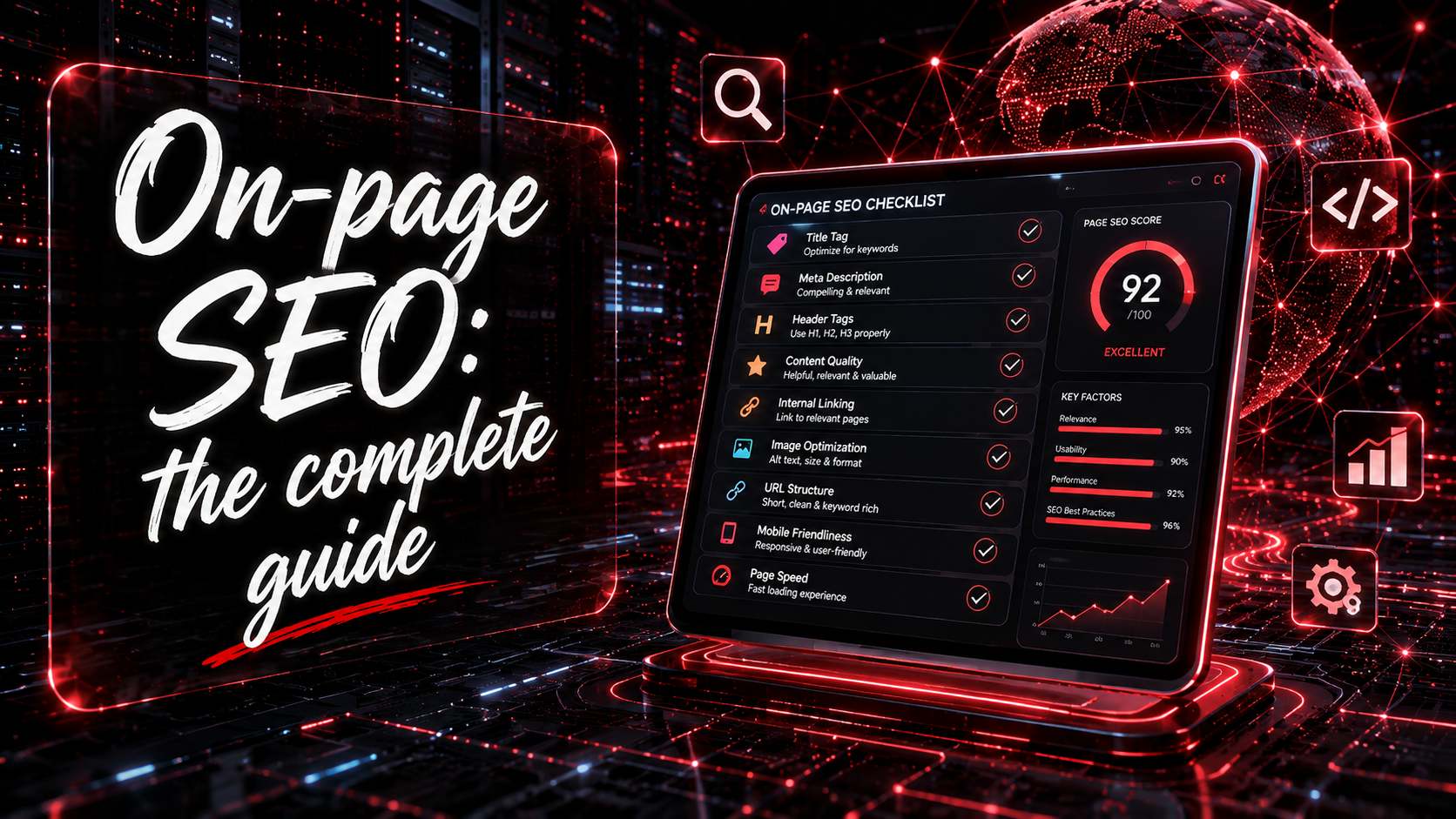
On-page SEO is the part you actually control. Not Google's algorithm, not what other sites do, just the choices you make on your own pages. That makes it the best place to start.
On-page SEO is everything you do on a page to help it rank: the title, the headings, the content, the internal links, and the structure that tells Google what the page is about. Unlike backlinks or technical fixes, on-page work is fully in your hands, and small changes often show up in rankings fast.
What is on-page SEO?
On-page SEO covers every ranking factor that lives on the page itself. That includes the words you write, how you organize them with headings, the title and meta description, image alt text, and the links you point at other pages. It sits alongside off-page SEO, which is about links and reputation, and technical SEO, which is about how your site runs.
If you are new to the whole picture, our guide to what SEO is puts on-page in context.
What are the most important on-page elements?
The elements that matter most are your content, your title tag, your headings, and your internal links. Content does the heavy lifting, because Google is trying to answer a question and your words are the answer. The title tag tells both Google and the searcher what the page offers. Headings break content into scannable sections. Internal links pass context and authority between your pages.
Get these four right and you are ahead of most sites. Everything else refines the edges.
A quick way to picture it: content answers the searcher, the title and headings organize that answer, and internal links connect it to the rest of your site. When those pieces line up, Google has an easy time deciding what the page is about and who should see it.
How do you write a title tag that ranks?
Write a title that includes your main keyword and reads like something a person would click. The title tag is the blue headline in search results, and it carries real ranking weight. Put your primary keyword near the front, keep it under roughly 60 characters so it does not get cut off, and make it specific.
Compare "Our Services" with "On-page SEO services for small business." The second tells Google and the reader exactly what they get. Vague titles waste your best on-page signal.
Where do keywords go on a page?
Your primary keyword belongs in the title, the first paragraph, at least one heading, and a few times through the body where it reads naturally. The goal is to confirm the topic, not to repeat a phrase until it sounds strange. Google is good at understanding related words now, so write for a human and cover the subject properly.
Before you can place keywords, you need the right ones. That comes from keyword research, which tells you the exact phrases people search.
How do you match search intent?
Match search intent by giving searchers the type of page they expect. Someone searching "how to change a tire" wants a step-by-step guide, not a product listing. Someone searching "buy winter tires" wants to shop. Look at what already ranks for your keyword, and if the top results are all guides, publish a better guide, not a sales page.
Intent is the mistake I see most often. Great content aimed at the wrong intent simply does not rank.
Why do internal links matter on a page?
Internal links help Google understand how your pages relate and spread ranking strength across your site. When you link from one article to another with descriptive anchor text, you tell Google what the target page is about. You also keep readers moving through your content. This is part of building blog posts that rank and connecting them into topic groups.
Anchor text is the detail people skip. Linking with the words "on-page SEO" tells Google far more than linking the word "here." Describe the page you are pointing to, keep it natural, and avoid linking the same phrase to five different pages.
What about structured data?
Structured data is extra code that spells out what your content means, and it can earn you richer search results. Marking up an FAQ, a recipe, or a product can produce star ratings or expandable questions in the results, which lifts clicks. Our structured data guide covers how to add it without breaking anything.
What are the common on-page mistakes?
The usual mistakes are missing or duplicate titles, keyword stuffing, ignoring intent, and burying the answer. Google now reads pages a lot like a person, so anything that feels forced tends to backfire. Say what the page is about early, structure it clearly, and answer the question you promised.
Ready to check your own pages? Run a free audit to see your on-page issues, or work through the AEO and GEO checklist to cover answer-engine visibility too.
Frequently asked questions
What is the difference between on-page and off-page SEO?
On-page SEO covers what you control on your own pages, like content, titles, headings, and internal links. Off-page SEO covers signals from elsewhere, mainly backlinks and mentions from other sites. On-page makes a page relevant, off-page makes your site trusted, and you need both to rank well.
What is the most important on-page factor?
Content quality is the biggest one. Google is trying to answer a searcher's question, and your content is that answer. A page that fully and clearly covers the topic beats one stuffed with keywords. Titles, headings, and internal links matter, but they support strong content rather than replace it.
How many times should I use my keyword?
There is no magic number. Use your primary keyword in the title, the first paragraph, at least one heading, and a few times in the body where it reads naturally. Modern Google understands related words, so forcing a phrase repeatedly looks unnatural and can hurt more than help.
Do meta descriptions help SEO?
Meta descriptions are not a direct ranking factor, but they influence clicks. Google shows them under your title in results, so a clear, compelling description can pull more visitors from the same position. More clicks can indirectly support your ranking, which makes descriptions worth writing well.
What is search intent in on-page SEO?
Search intent is what a person actually wants when they search. Some searches want to learn, others want to buy or compare. Matching your page type to that intent is one of the strongest on-page moves. Check what already ranks for your keyword and create the same kind of page, only better.
Want this done for your site?
Run a free audit and see exactly what to fix for Google and AI search.