What is llms.txt and how to write one
You write a genuinely helpful page, then watch ChatGPT explain your topic to a customer and never once say your name. Annoying, right? A small file called llms.txt is one of the ways people are trying to fix that, by pointing AI models at the pages they most want read.
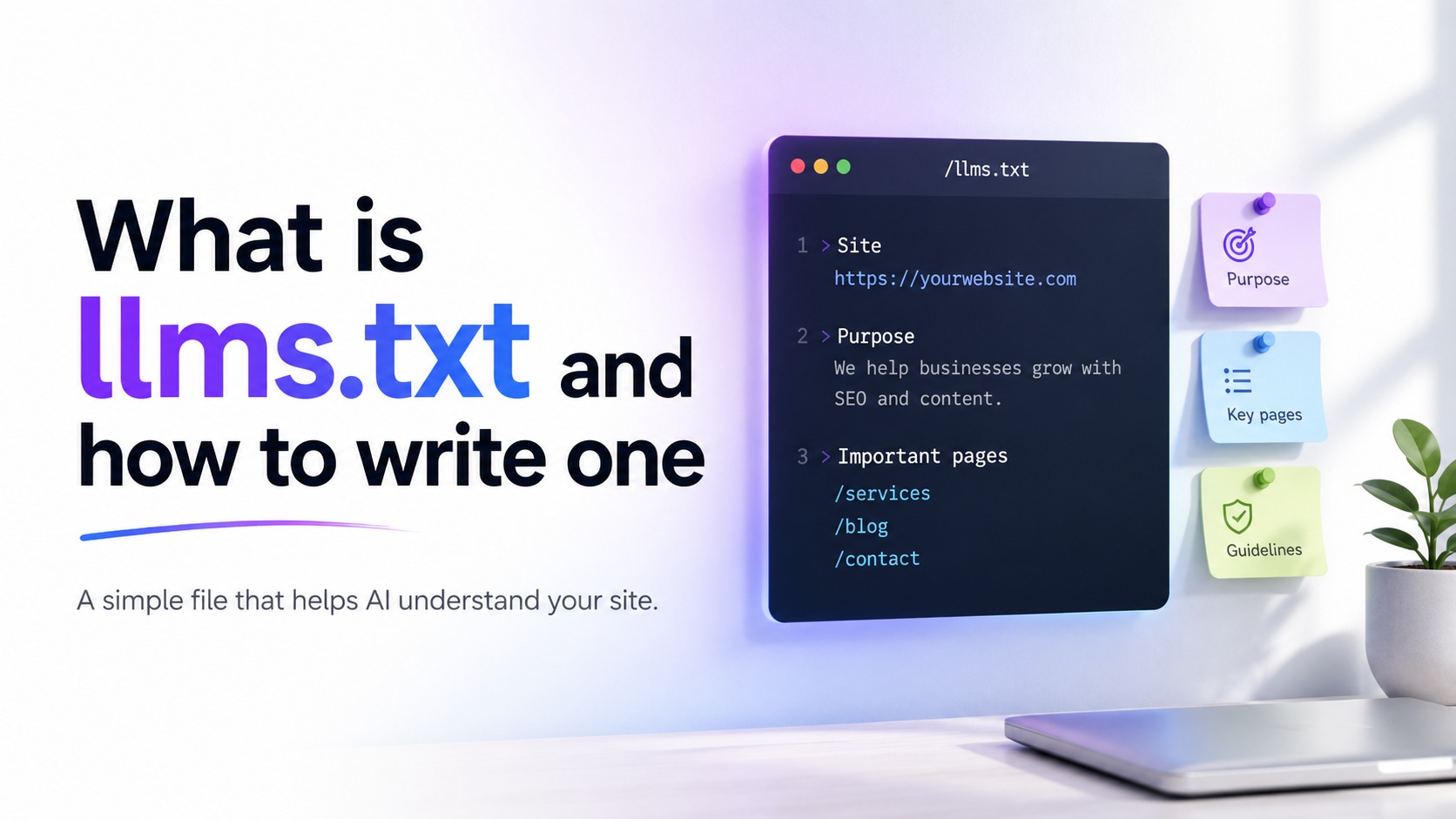
llms.txt is a plain text file you place at the root of your site, at yourdomain.com/llms.txt, that lists your most important pages in Markdown so language models can find and understand your best content fast. Think of it as a curated map for AI, not a set of rules the models are forced to obey.
What llms.txt actually is
llms.txt is a single Markdown file that names your key pages with short descriptions. It sits next to your robots.txt and sitemap, but it speaks to a different audience: the models behind ChatGPT, Perplexity, Claude and Google's AI answers rather than a traditional crawler indexing every URL. The format was proposed in 2024 and has been picked up by a growing set of docs sites and software companies. There is no committee forcing anyone to honor it, which matters when you judge results.
Why the file exists at all
The problem it targets is context, not access. A model answering a question does not read your whole site. It works from whatever text it can pull quickly, and your navigation, cookie banners and footers are noise to it. An llms.txt file strips that away and says, in effect, here are the ten pages that explain who we are and what we know. If you are trying to get named inside AI answers, that clarity helps. I cover the wider version of that goal in our guide on how to get cited by ChatGPT, Gemini and Perplexity, and llms.txt is one tactic inside it.
How to write an llms.txt file
Writing one takes about twenty minutes. Start with an H1 that is your brand or product name. Add a short blockquote summary of what you do. Then list sections as H2 headings, and under each, bullet links in the format [Page title](https://yourdomain.com/page): one-line description. Here is the shape:
# Acme Analytics> Acme is a privacy-first web analytics tool for small teams.## Docs- [Quickstart](https://acme.com/docs/quickstart): install and see data in five minutes- [Pricing](https://acme.com/pricing): plans and limits
Keep descriptions honest and specific. Point only to pages you would happily have quoted. If you sell to buyers who research inside AI tools, put your comparison pages, your pricing, and your clearest explainer content near the top. A companion file, llms-full.txt, can hold the full text of those pages for models that want more, though most sites start with the short version.
How it differs from robots.txt and sitemaps
These three files do not compete. robots.txt tells crawlers where they may and may not go. An XML sitemap lists every URL you want indexed, which helps search engines but overwhelms a model with equal-weight links. llms.txt is opinionated on purpose: it ranks a short set of pages by importance and adds human-readable context. If you want the crawling and indexing side handled well first, work through our technical SEO checklist before you spend time here, because a file no model can reach helps nobody.
Does llms.txt actually work yet
Honest answer: the evidence is early and mixed. Major AI providers have not publicly committed to reading the file the way search engines committed to sitemaps years ago. Some crawlers appear to fetch it, others ignore it. So treat llms.txt as low-cost insurance rather than a ranking lever. The pages you link still have to earn citations on their own merits, which comes down to clear answers, real expertise and structure that machines can parse. That is the same work behind getting your brand mentioned in ChatGPT and showing up in Google AI Overviews.
Where it fits in your wider plan
llms.txt is a finishing touch, not a strategy. It helps most when the underlying content is already answer-shaped and trustworthy. If you are still sorting out how these disciplines relate, read SEO vs AEO vs GEO so you know which lever you are pulling. Then use our free AEO and GEO checklist to confirm your key pages are ready to be cited, and run them through our free SEO and GEO tools to spot gaps before you publish the file.
What to do this week
Pick your eight to twelve best pages, write a fifteen-line llms.txt with honest one-line descriptions, and upload it to your web root. Confirm it loads at yourdomain.com/llms.txt with no login wall. Then move on, because the file is done and the real gains live in the content it points to. Revisit it once a quarter when your best pages change. One warning worth heeding: do not list pages you would not want a competitor or a skeptical model to read closely, because the file spotlights whatever you put in it. Treat the shortlist as a public statement of your best work, and let those pages do the persuading.
Frequently asked questions
Where do I put the llms.txt file?
Place it at the root of your domain so it loads at yourdomain.com/llms.txt, the same location pattern as robots.txt. It must be publicly reachable with no login or paywall in front of it. If your CMS blocks root-level files, ask your developer to add a static route or redirect.
Is llms.txt required for AI to find my site?
No. AI models can already read pages they crawl or reach through search, so your content can be cited without the file. llms.txt is an optional shortcut that gives models a cleaner, curated view of your best pages. Skip it only if you have no capacity, since writing one takes about twenty minutes.
What is the difference between llms.txt and llms-full.txt?
llms.txt is a short index of links with one-line descriptions, meant to be scanned fast. llms-full.txt holds the actual full text of those pages in one file, for models that want the complete content without crawling. Most sites start with the short index and add the full version later if needle-moving.
Will llms.txt help me rank in ChatGPT or Perplexity?
It might help models find and understand your pages, but it is not a guaranteed ranking factor, and no major provider has publicly promised to honor it. Citations still depend on clear, trustworthy, answer-shaped content. Treat the file as cheap insurance that sits on top of solid content, not a replacement for it.
How often should I update llms.txt?
Review it once a quarter, or whenever you publish or retire an important page. Because it lists only your top pages, it does not need constant edits like a sitemap. Set a recurring reminder so the file does not drift out of date and start pointing models at pages you have since removed or replaced.
Want this done for your site?
Run a free audit and see exactly what to fix for Google and AI search.