How to humanize AI-written content
You know the feeling. Three sentences into a page and something is off. The rhythm is too even, every paragraph opens the same way, and it keeps reaching for words no human says out loud. You are reading AI, and you knew before you could say why. Your readers get that same feeling, and it costs you their trust. So let us fix it.
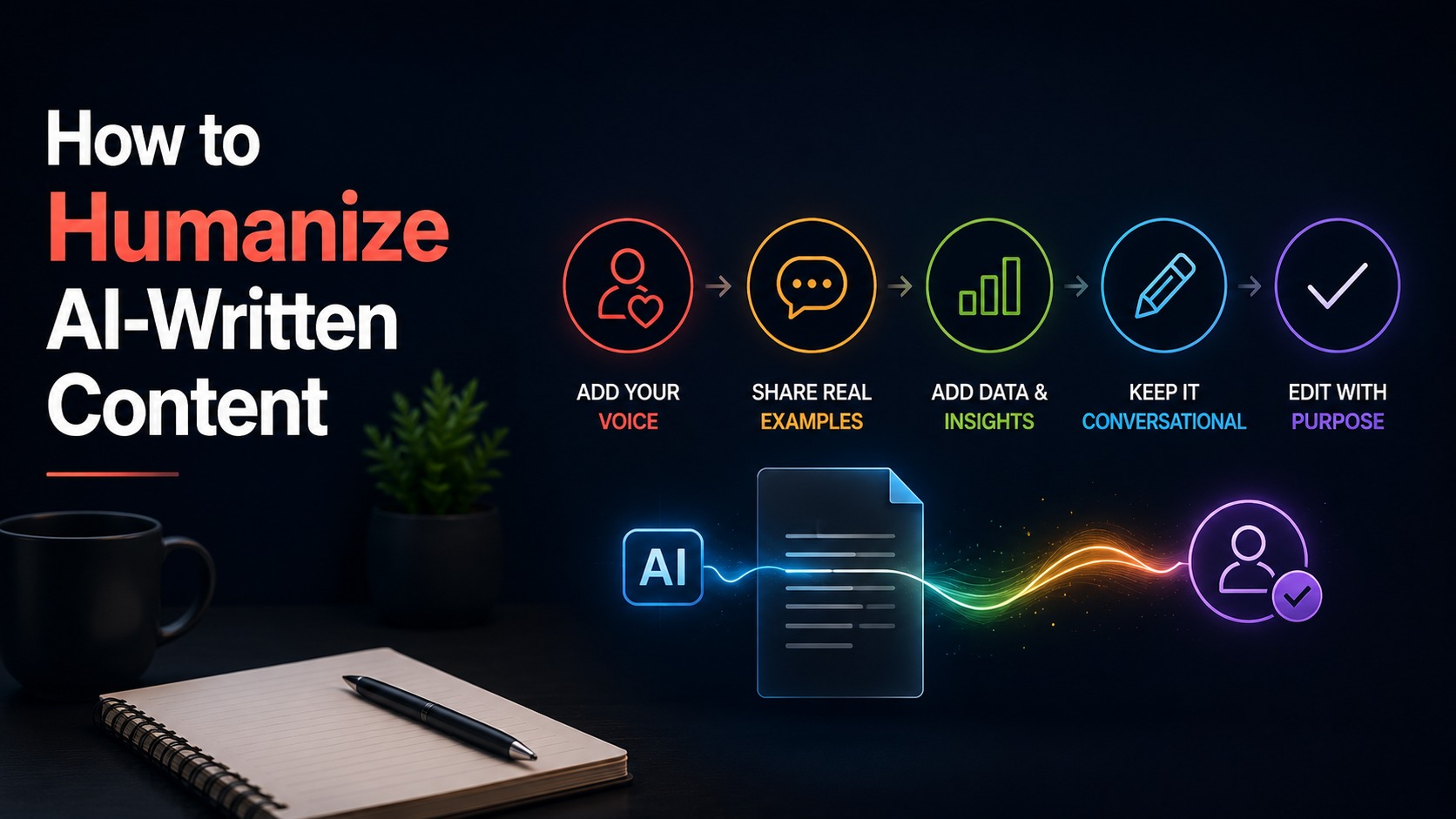
To humanize AI content, you edit out the patterns that give it away and put a real person back into the writing. That means varying your sentence length, cutting the stock phrases, adding opinions and specific examples, and reading the whole thing aloud. The goal is not to trick a detector. It is to sound like you actually meant it.
Learn the tells first
You cannot fix what you cannot see, so start by learning the giveaways. AI writing loves the rule of three, listing everything in tidy trios. It overuses a small set of words: things get described as robust, seamless, vibrant. It hedges constantly with phrases like it is worth noting. It writes paragraphs that are all the same length and sentences with the same tidy shape. And it opens with throat-clearing that says nothing. Once you notice these, you cannot unnotice them, and that awareness is half the job. If you want the deeper background on why this matters for rankings, our post on whether AI content hurts your SEO covers it.
Break the rhythm
The single biggest tell is even rhythm, so attack that first. Human writing lurches. We write a long, winding sentence that follows a thought around a corner, and then we stop. Short. AI does not do that on its own; it produces sentences of remarkably similar length, one after another, until the whole thing hums at one flat pitch. Go through your draft and deliberately shatter that evenness. Chop a long sentence in half. Glue two short ones together. Start a sentence with And, or But, the way people actually talk. The meaning barely changes. The feel changes completely.
Kill the stock vocabulary
Next, hunt down the words that scream machine. You already know them. Delve, leverage, robust, seamless, testament, landscape used to mean anything other than actual land. Phrases like in today's world, or in conclusion, or increasingly. When you find one, do not swap it for a fancier synonym. Say the plain thing instead. If the draft says this tool leverages automation, write this tool automates the boring part. Plainer is more human, almost every time.
Put yourself back in
Here is the part most people skip, and it is the one that matters most. AI cannot have an opinion or a memory, so it writes around them. You have to add them back. Drop in a real example from your own work. Take a side. Say what you would actually tell a friend over coffee, not what sounds safe. When I edit a draft, the line that saves it is usually the one the model never could have written, because it only lives in my head. That specificity is also what makes content worth citing, which ties straight into writing a blog post that ranks at all.
Read it out loud
This sounds too simple to work. It works. Read the whole draft aloud, and every fake-sounding line will trip your tongue. You will hear the repetition. You will hit a phrase and think, I would never say that, and you will fix it on the spot. Your ear catches what your eye skims past. If you stumble, the reader will too. I have never edited a page this way without changing at least a dozen lines, and the page is always better for it. Do it in a quiet room, or mutter it under your breath at your desk. Either way, your ear will catch what a hundred silent read-throughs missed.
What not to overdo
One warning. Do not humanize your way into sloppiness. The goal is natural, not careless. Keep your facts straight, keep your structure clear, and keep the keywords you need for search, since content marketing still has to serve a purpose. Humanizing is about voice and rhythm, not throwing out the craft. A post can sound like a person and still be organized, accurate, and useful. That is the whole target.
Run every AI draft through this before it ships: break the rhythm, kill the stock words, add something only you could say, and read it aloud. Four passes, maybe twenty minutes. If you want the checklist beside you while you work, grab our free AEO and GEO checklist, and if you would rather see which of your live pages already read like a robot, our free SEO tools will point you at them. The draft is never the problem. Shipping it unedited is.
Frequently asked questions
What is the fastest way to make AI content sound human?
Read it aloud and vary your sentence length. Those two moves fix most of the problem in one pass. Reading aloud exposes every stiff, repetitive line, and deliberately mixing short and long sentences breaks the flat rhythm that gives AI away. Everything else is polish on top of those two.
Do AI detectors actually work?
Not reliably. They produce false positives on human writing and miss well-edited AI text, so building your process around beating a detector is a waste of effort. Focus on making the content genuinely good and genuinely yours instead. If it reads like a real person wrote it, detector scores stop mattering.
Which words most often reveal AI writing?
Watch for delve, leverage, robust, seamless, vibrant, testament, and figurative uses of landscape, plus hedges like it is worth noting and openers like in today's world. When you spot one, replace it with the plain version of what you meant rather than a fancier synonym. Plainer language reads far more human.
Can I humanize content without rewriting the whole thing?
Usually, yes. Most drafts improve dramatically from targeted edits: breaking the rhythm, cutting stock phrases, and adding a few genuinely personal lines. You rarely need a full rewrite. The exception is a draft that is generic all the way through, which often needs new substance, not just a voice pass.
Does humanizing content help it rank better?
Indirectly, yes. Content that reads naturally holds attention longer and earns more trust, which supports engagement signals. More importantly, the same edits that humanize a draft, adding specifics and opinions, also make it more original and more likely to be cited. Better writing and better SEO tend to move together here.
Want this done for your site?
Run a free audit and see exactly what to fix for Google and AI search.