Voice search optimization guide
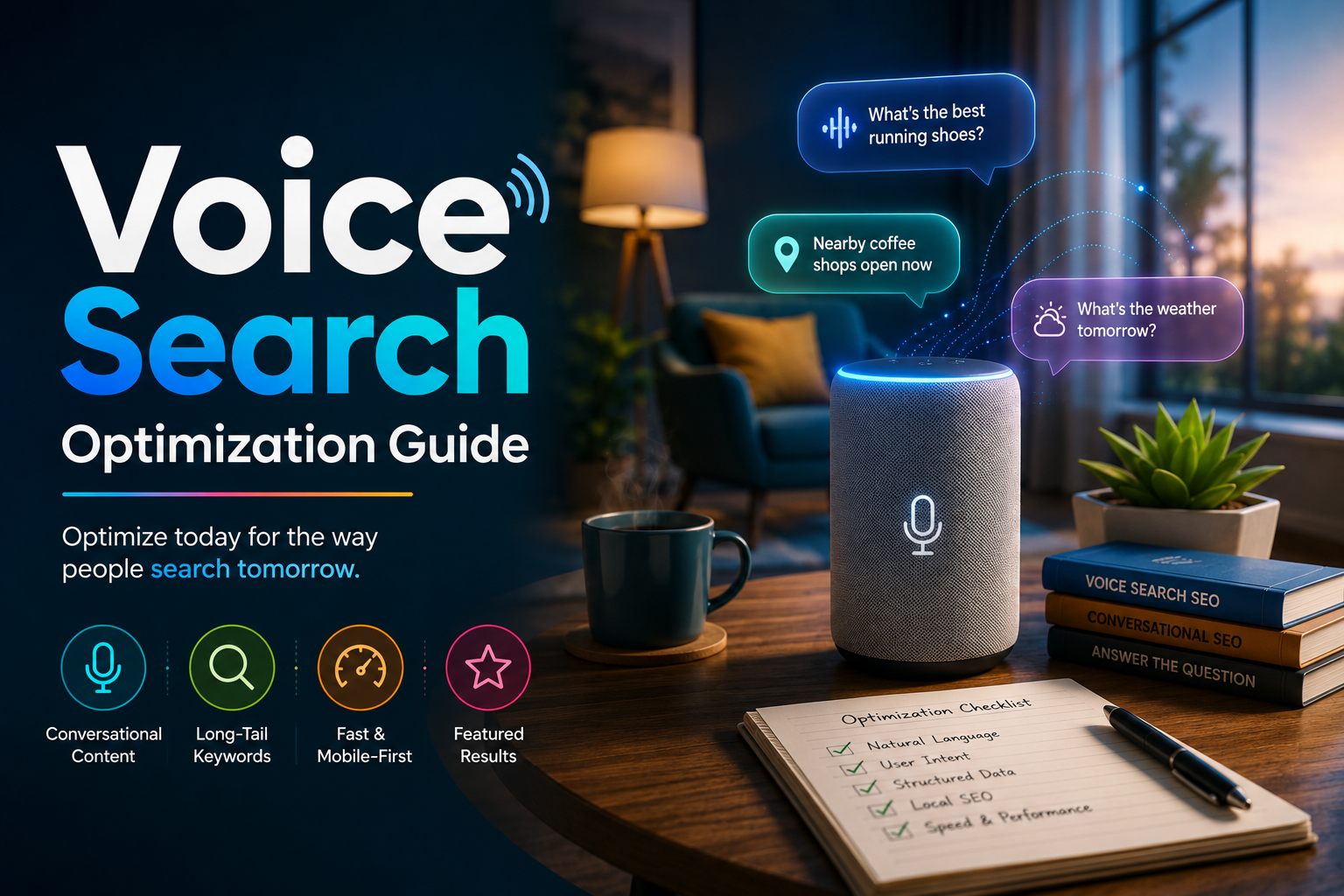
Ask your phone a question out loud and it hands back one answer, not a page of links. That single-answer reality is what makes voice search its own discipline, and it is why plenty of pages that rank fine never get read aloud. The upside is that voice search optimization overlaps with almost everything else worth doing for search.
Voice search optimization means shaping content so an assistant can read one clear answer aloud. Match the natural, question-shaped way people speak, give a direct one or two sentence answer near the top of the page, load fast on mobile, and build the trust that makes a device choose your page as the single result.
Why voice search optimization is different
Voice search optimization is different because it usually returns one spoken answer instead of a list. People also speak differently than they type, using longer, more conversational phrases and full questions. Someone types 'weather chennai' but says 'what is the weather like in Chennai today'. That shift toward natural language is the heart of the work, and it lines up neatly with how AI assistants read the web. If you understand how Google search works, voice is just the same ranking with a narrower, spoken output.
Write the way people actually talk
Write for voice by matching the longer, natural phrasing people use out loud. Target full questions like who, what, where, how and why, and answer them in plain language. These conversational, long-tail phrases are less competitive and map directly to spoken queries. Good keyword research will surface them, and the People Also Ask box is a goldmine of the exact questions people voice. Avoid stiff, keyword-stuffed sentences, because an assistant reading them aloud will sound wrong and Google knows it.
Give one clear answer up top
Give a single, quotable answer near the top of the page, because voice assistants usually read from the featured snippet. Put the question in a heading, answer it in the next sentence in about 30 words, then expand below for readers who want depth. This is the same move that wins featured snippets, and voice largely draws from the same source. If your answer needs a windup to make sense, a device will skip it for a competitor who gets to the point faster.
It helps to picture the reply being spoken rather than read. A person scanning a screen will forgive a clunky sentence, but the same sentence sounds strange coming out of a speaker. Read your answer aloud before you publish. If it trips you up, it will trip up the assistant too. Simple words, short sentences and a natural rhythm all make your answer a better candidate to be voiced, and they happen to make the page easier for everyone else to read.
Get the technical basics right
Get the technical basics right, because voice results lean heavily on fast, mobile-friendly pages. Most voice searches happen on phones, so a slow or clumsy mobile page rarely gets chosen. Serve over HTTPS, keep load times low, and make sure the page reads cleanly on a small screen. Structured data helps assistants parse your content, so schema markup is worth adding. Our free SEO tools can flag speed and mobile problems that quietly keep you out of spoken results.
Context matters more with voice than with typed search. Many spoken queries happen hands-free, in the car or the kitchen, when the person cannot scroll or tap through options. That raises the bar for your answer to be complete and correct on the first pass, because there is no easy second click. Anticipate the natural follow-up question and answer it in the next line, so the assistant can keep reading from your page instead of jumping to someone else's.
Do not ignore local voice search
Do not ignore local voice search, since a big share of spoken queries are looking for something nearby. People ask for the closest option, opening hours, or directions, often while driving. Keep your Google Business Profile accurate, list consistent name, address and phone details, and answer the practical questions locals ask. Our local SEO guide covers the full setup. For any business with a physical location, this is often where voice pays off first.
Where voice meets AI assistants
Voice search now blends into the broader world of AI answers. The same clean, spoken-friendly answers that win voice also help you get cited by ChatGPT, Gemini and Perplexity and appear in answer engine optimization results. One well-structured answer can serve a snippet, a smart speaker and a chatbot at once. That is the real return on voice search optimization: you are not chasing one device, you are making your best answers easy for every assistant to read.
Voice search rewards the same habits as good writing: talk like a person, answer fast, and make the page easy to load and trust. Do that and the assistant reading answers aloud will eventually read yours.
Frequently asked questions
Is voice search optimization different from regular SEO?
It overlaps heavily but has a narrower focus. Voice returns one spoken answer, so it rewards conversational, question-shaped content and a single clear response near the top of the page. The technical basics, speed, mobile-friendliness and trust, are the same fundamentals that help all of your search visibility.
What kind of keywords work for voice search?
Long, natural, question-shaped phrases work best, because people speak in full sentences rather than clipped terms. Target who, what, where, how and why questions the way someone would actually say them out loud. These conversational phrases are usually less competitive and map directly to the queries assistants answer aloud.
Where do voice assistants get their answers?
Most voice results come from the featured snippet or the top-ranking answer for a query. That is why winning the snippet, with a concise answer under a clear heading, is the most direct path to being read aloud. Fast, mobile-friendly pages are strongly favored, since most voice searches happen on phones.
Does local SEO matter for voice search?
A great deal. Many spoken queries look for something nearby, like the closest option or opening hours, often while the person is on the move. Keep your Google Business Profile accurate and your name, address and phone details consistent, and answer the practical local questions people ask.
How does voice search relate to AI assistants?
They are converging. The same clear, spoken-friendly answers that win voice also help you appear in AI Overviews and get cited by chatbots. One well-structured answer can serve a smart speaker, a snippet and a chatbot at once, so voice optimization now pays off across more answer surfaces every year.
Want this done for your site?
Run a free audit and see exactly what to fix for Google and AI search.