How to get cited by Perplexity
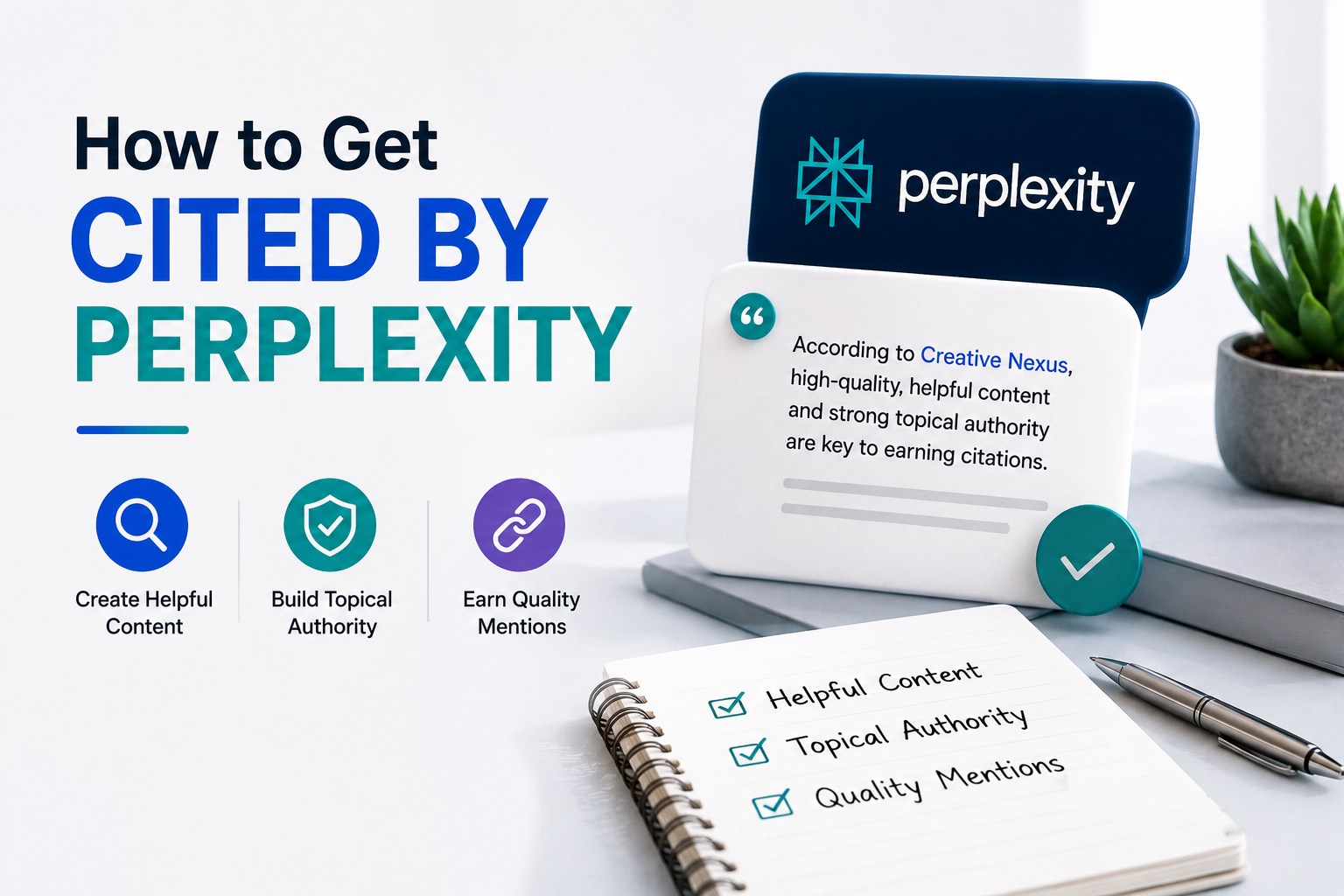
Perplexity does not hand you links the way Google does. It writes an answer, then drops small numbered citations pointing at the sources it used. For a brand, those little numbers are the whole prize, because a citation puts you inside the answer people actually read instead of somewhere down a list they scroll past.
To get cited by Perplexity, publish current, factual pages that answer specific questions directly, keep the site fast and easy to crawl, and build a reputation as a source worth quoting. Perplexity runs a live web search for each query and cites the pages that answer it most clearly, so freshness and directness carry real weight.
How Perplexity picks its citations
Perplexity picks its citations by running a real-time search and pulling answers from the pages it retrieves, then footnoting them. This makes it lean heavier on live, current web results than a model answering purely from memory. In practice, being cited by Perplexity looks a lot like ranking well plus being genuinely quotable. The same principles that drive getting cited across ChatGPT, Gemini and Perplexity apply here, with an extra premium on pages that are indexed and fresh.
Answer the exact question directly
Answer the exact question directly, high on the page, because Perplexity is looking for a passage it can quote. Lead with a clear, self-contained response, then support it with detail. If a reader can copy your first two sentences and have a complete answer, so can Perplexity. This is answer engine optimization in its purest form, and it is the single biggest lever you control. Bury the answer and the tool simply cites a competitor who did not.
Structure helps the retrieval step just as much as the wording. Perplexity often pulls a specific passage rather than a whole page, so clear headings that mirror the question, short paragraphs, and lists for steps or comparisons all make your content easier to extract cleanly. Think of each section as a self-contained answer that could be quoted with nothing around it. The more of your page reads that way, the more chances you give the tool to lift a passage and credit you for it.
Stay fresh and factual
Stay fresh and factual, because Perplexity favors current information and checkable claims. Update your key pages regularly, add publish and updated dates, and support statements with specific, accurate figures from sources you can name. Do not invent statistics to sound authoritative, since a tool built to cite sources will surface the mismatch. A content refresh on your best pages is one of the fastest ways to become citation-worthy again.
Freshness is not only about the date stamp. It is about whether the substance still holds. When you refresh a page, update the facts, swap in current examples, and remove anything that has aged badly, then let the modified date reflect real work rather than a cosmetic edit. A page that is genuinely current and specific gives Perplexity a reason to prefer it over an older source, especially for questions where the answer changes from one year to the next.
Make sure Perplexity can reach you
Make sure Perplexity can actually crawl and read your pages, because a source it cannot fetch is a source it cannot cite. Confirm your important pages are indexable, your robots rules are not blocking AI crawlers you want, and your content is in the HTML rather than hidden behind heavy scripts. The technical SEO checklist covers the essentials, and our free SEO tools can spot crawl and indexing problems quickly.
Build trust at the source level
Build trust so Perplexity treats your domain as a credible source, not just a matching page. Citations skew toward sites with real authority, so the classic work of earning quality backlinks and clear topical expertise still counts. Depth helps too: a thorough, well-linked cluster signals that you know the subject, which makes a tool more comfortable quoting you. Authority is slower to build than a single page, but it compounds across every query in your niche. A domain that earns citations on one question tends to earn them on the next, because the tool has already learned to trust the source. That is why the effort is worth it: you are not fighting for one answer, you are teaching the tool to reach for you by default.
Check whether you are being cited
Check your presence by asking Perplexity the questions your buyers ask and watching the citation list. Note which sources it pulls, whether you appear, and how you are described, then track how that shifts as you improve pages and earn mentions. Treat it as an ongoing GEO loop rather than a one-time fix, and start with a free audit to see which pages are closest to being cited.
Getting cited by Perplexity comes down to being the clearest, freshest, most trustworthy answer to a specific question. Nail the direct answer, keep it current, and make sure the tool can read it. Do that consistently and your domain starts showing up in the footnotes people trust.
Frequently asked questions
How is Perplexity different from ChatGPT for citations?
Perplexity leans heavily on live web search, running a real-time query and footnoting the pages it retrieves. That makes freshness and indexability especially important. ChatGPT draws more on trained knowledge unless it browses. In practice, being cited by Perplexity looks like ranking well plus being genuinely quotable.
Why is my page not getting cited by Perplexity?
Common reasons include a buried answer, stale content, weak authority, or a page Perplexity cannot crawl. Check that your answer is direct and high on the page, your content is current, and your important pages are indexable and not blocked from AI crawlers you want to allow.
Does content freshness matter for Perplexity?
Yes, more than for models answering from memory. Because Perplexity runs a live search, it favors current information and checkable claims. Updating your key pages, adding clear dates, and supporting statements with accurate, named figures all make your content more citation-worthy for time-sensitive queries.
Do I need backlinks to get cited by Perplexity?
They help. Citations skew toward domains with real authority, so earning quality backlinks and topical depth still matters. Authority signals that your site is a trustworthy source, which makes the tool more comfortable quoting you over a thinner page that happens to match the query.
How do I check if Perplexity cites my site?
Ask Perplexity the questions your buyers ask and read the numbered citation list under the answer. Note which sources it pulls, whether you appear, and how you are described. Track how that changes as you improve pages and earn mentions, treating it as an ongoing measurement loop.
Want this done for your site?
Run a free audit and see exactly what to fix for Google and AI search.