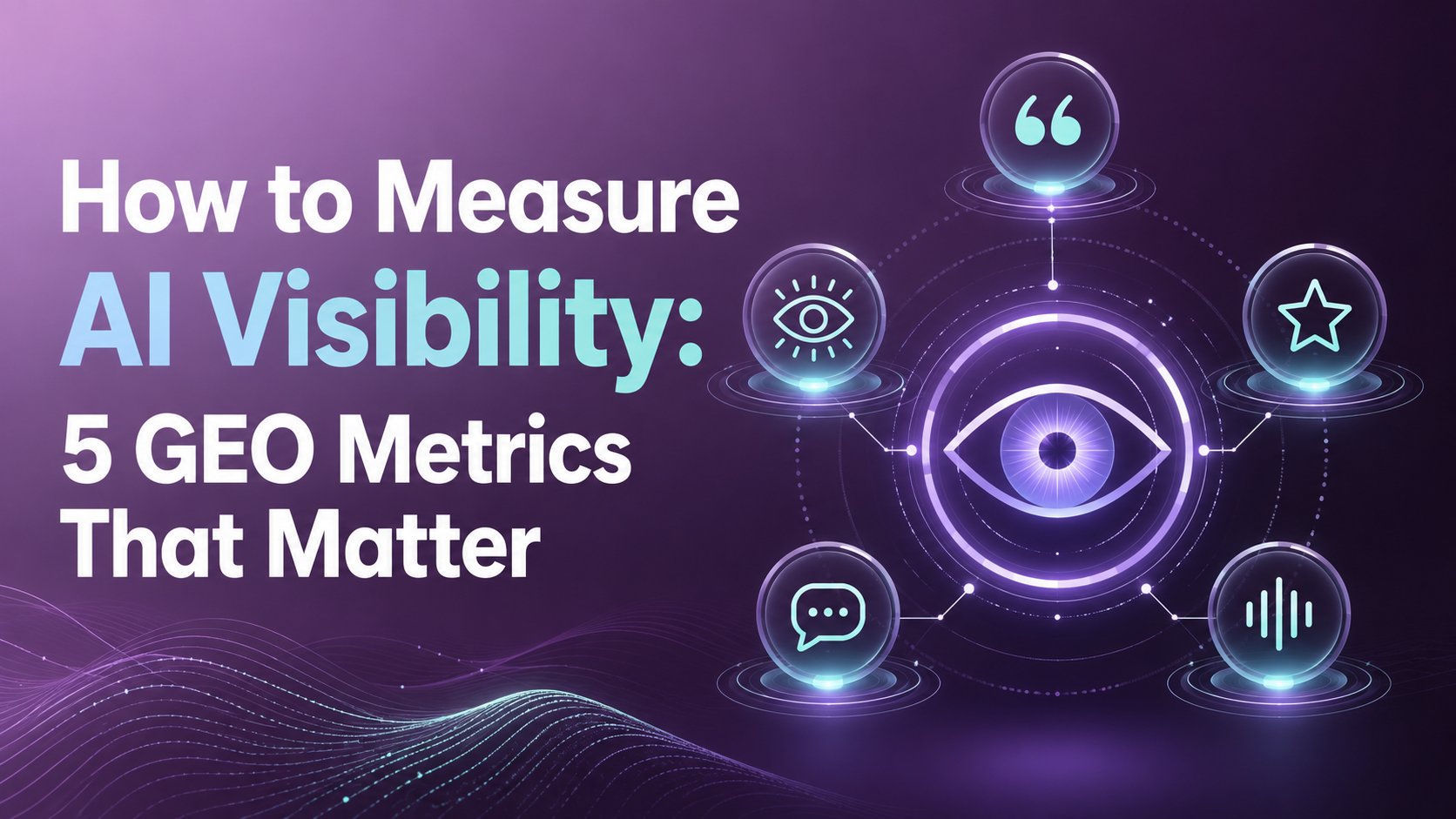
How to Measure AI Visibility: 5 GEO Metrics That Matter
Ask your analytics whether ChatGPT recommends your brand and it has no answer. Rankings and clicks were built for a world of links, and AI answers don't leave the same trail. Measuring AI visibility takes a different set of numbers.
How do you measure visibility in AI search?
You track how often AI engines cite and name your brand, not where you rank. The five core GEO metrics are citation frequency, brand mention rate, share of voice, sentiment, and referral traffic from AI tools. Together they tell you whether AI is recommending you and how that changes over time.
1. Citation frequency
This counts how often an AI engine links to your site as a source across a set of category questions. It is the closest thing to a ranking in the AI world, and it maps directly to the high-intent referral traffic those citations send.
2. Brand mention rate
Sometimes an AI names your brand without linking to you. Brand mention rate measures how often you appear by name in answers about your category, linked or not. It captures recommendation and awareness that a link-only metric would miss.
3. Share of voice
Share of voice compares how often you are mentioned against your competitors for the same questions. A rising citation count means little if a rival's is rising faster. This metric tells you whether you are winning the category or just holding position.
4. Sentiment
Being mentioned is not the whole story; how you are described matters. Sentiment tracks whether the AI frames you as the premium choice, the budget option, or something less flattering. That framing shapes what a buyer thinks before they ever reach your site.
5. AI referral traffic
Finally, watch the visits arriving from AI tools. Referrals from chat.openai.com, perplexity.ai and similar sources are a direct signal that citations are turning into people. Tag them in your analytics and track whether they grow as your other GEO metrics improve.
Key takeaways
- Rankings can't measure AI visibility; you need citation-based metrics instead.
- Share of voice matters more than raw citation count, because it is relative to rivals.
- Sentiment shapes buyer perception, so track how AI describes you, not just whether it does.
- AI referral traffic proves citations are converting into real visitors.
Track all five automatically with the Creative Nexus Citation Engine.
Frequently asked questions
How do you measure AI search visibility?
By tracking how often AI engines cite and name your brand rather than where you rank. The core metrics are citation frequency, brand mention rate, share of voice, sentiment, and AI referral traffic.
What is citation frequency?
It counts how often an AI engine links to your site as a source across a set of category questions. It is the closest equivalent to a ranking in AI search and drives high-intent referral traffic.
What is brand mention rate?
The share of AI answers about your category that name your brand, whether or not they link to you. It captures recommendation and awareness that a link-only metric would miss.
What is share of voice in GEO?
How often your brand is mentioned compared to competitors for the same questions. It shows whether you are winning the category, since a rising citation count means little if a rival's rises faster.
Why does sentiment matter for AI visibility?
Because how an AI describes you shapes buyer perception before they reach your site. Being framed as the premium choice or the budget option changes intent, so track the framing, not just the mention.
How do I track AI referral traffic?
Tag visits from sources like chat.openai.com and perplexity.ai in your analytics. Growth in that traffic is direct proof that AI citations are turning into real visitors.
Can Google Analytics measure GEO?
Partly. It can capture AI referral traffic if you tag the sources, but it cannot tell you how often you are cited or named inside AI answers. For that you need a dedicated citation tracker.
How often should I measure these metrics?
AI answers change frequently, so sample regularly, weekly or even daily for key queries. Trends over time matter more than any single snapshot, since citations are volatile day to day.
What is a good citation frequency?
There is no universal number; judge it relative to competitors and to your own trend. A rising share of voice against rivals is a healthier sign than any absolute citation count on its own.
Do I need a tool to measure GEO?
For citation frequency, mention rate, share of voice and sentiment, yes, because they require querying AI engines at scale and parsing the answers. A citation engine automates that sampling and tracking.
Want this done for your site?
Run a free audit and see exactly what to fix for Google and AI search.