The Bland Tax: Why Generic Content Goes Invisible in AI
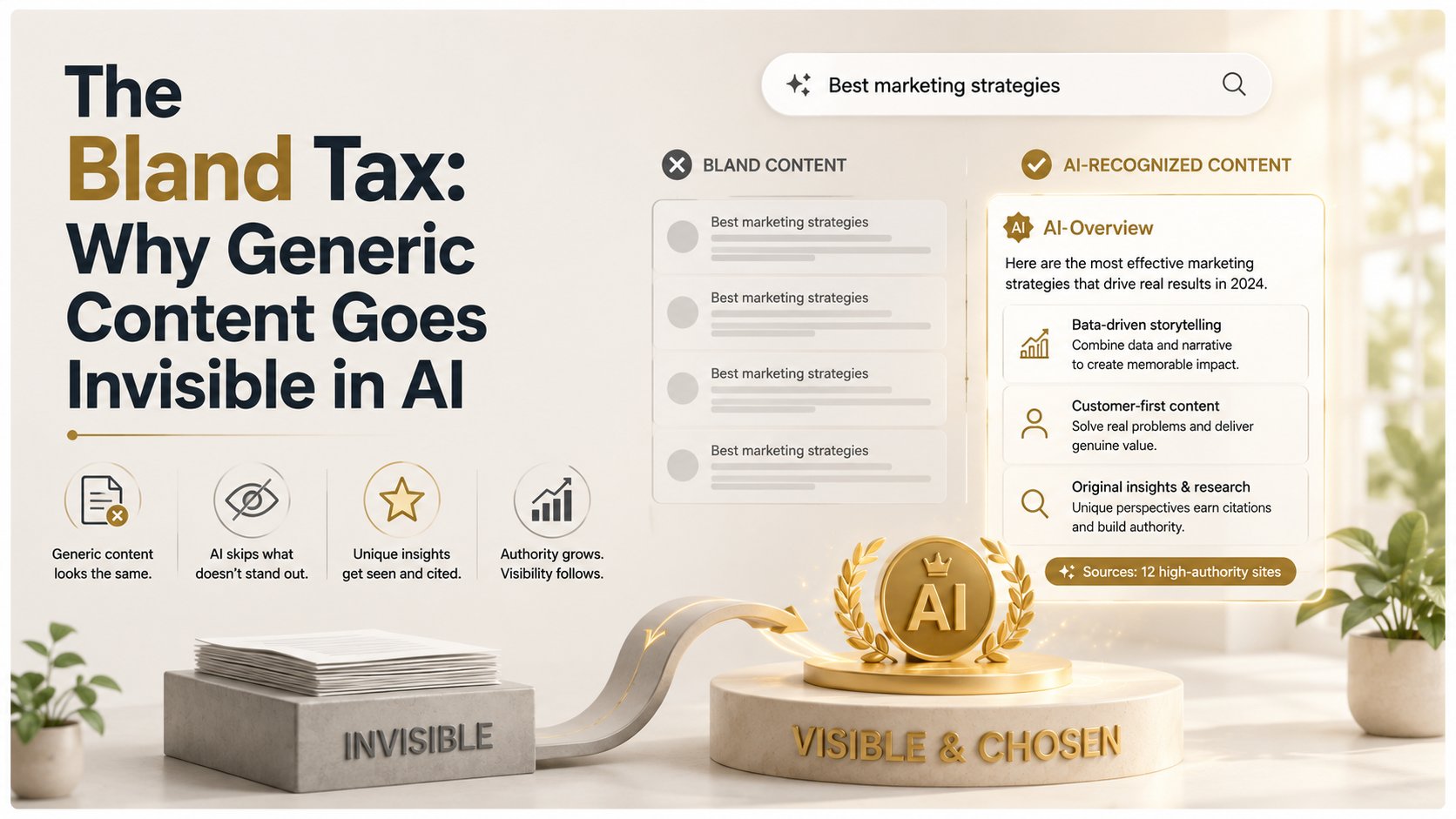
Here is an uncomfortable side effect of AI answers. When ten sites say roughly the same thing, the engine blends them into one summary and credits none of them by name. Being correct is not enough anymore. If you are interchangeable, you are invisible.
What is the bland tax?
The bland tax is the visibility a brand loses when its content is generic. AI synthesis layers collapse homogenous, me-too content into a composite answer, so a page that follows every technical rule but says nothing distinctive gets absorbed rather than cited. The cost is paid in missing mentions.
Why sameness makes you disappear
An answer engine's job is to distil many sources into one reply. When those sources agree and add nothing unique, the engine has no reason to attribute the point to any single one, so it states the consensus and moves on. Your careful, well-structured page becomes part of an average that carries someone else's name, or no name at all.
How to avoid the bland tax
Give the engine something only you can provide. Original data from your own customers or experiments cannot be summarised away, because no other source has it. A named framework or a distinctive term forces the engine to reference you when it uses the idea. A strong, specific point of view stands out against a field of hedged consensus.
Distinctiveness beats polish
A perfectly edited page that repeats the standard advice loses to a slightly rougher page with a proprietary statistic. Polish helps you get extracted, but distinctiveness is what gets you named. Aim for both, and if you have to choose where to spend effort, spend it on saying something no competitor can.
Key takeaways
- The bland tax is the visibility lost when AI collapses generic content into a composite answer.
- Sameness gives an engine no reason to attribute a point to you specifically.
- Original data, named frameworks and a clear point of view resist summarisation.
- Distinctiveness earns the citation; polish only earns the extraction.
Find where your content blends in with competitors using Creative Nexus Competitor Insights.
Frequently asked questions
What is the bland tax in GEO?
The visibility a brand loses when its content is generic. AI synthesis collapses interchangeable, me-too content into a composite answer, so a technically correct but undistinctive page gets absorbed rather than cited.
Why does generic content get absorbed by AI?
An answer engine distils many sources into one reply. When those sources agree and add nothing unique, it has no reason to credit any single one, so it states the consensus without naming a source.
How do I avoid the bland tax?
Give the engine something only you have: original data, a named framework, a distinctive term, or a clear point of view. Content that cannot be summarised away forces the engine to reference you.
Does original research help with AI citations?
Strongly. A statistic from your own customers or experiments exists nowhere else, so an engine that wants to use it has to cite you. Original data is among the most durable citation magnets.
Is distinctiveness more important than good writing?
Both matter, but they do different jobs. Clean writing helps you get extracted; distinctiveness gets you named. A rough page with a proprietary stat can beat a polished page of standard advice.
What is a named framework and why does it help?
A framework or concept you coin and label, which others must reference by your name when they use it. Naming an idea gives engines and writers a reason to attribute it to you specifically.
Can strong opinions help GEO?
Yes, when backed by evidence. A clear, specific point of view stands out against hedged consensus and gives an engine a distinct position to attribute. Opinion without support, though, gets discounted.
How do I know if my content is too generic?
Compare it with the top results for the same query. If you are saying the same things in the same order, you are at risk. Look for the point only you can make and lead with it.
Does the bland tax apply to product pages?
It can. If your product page lists the same generic benefits as every competitor, an AI shopping summary blends you in. Specific outcomes, data and differentiators help you stand out and get named.
How is the bland tax related to the underdog effect?
They are two sides of one idea: AI rewards distinctive substance over sameness. The underdog effect lets a distinctive smaller page win; the bland tax is what a generic larger page loses.
Want this done for your site?
Run a free audit and see exactly what to fix for Google and AI search.